
How to Streamline Your IT & Engineering Recruitment Process: The 2026 Guide
09 Feb, 20266 minutesTo streamline your IT & engineering recruitment process in 2026, integrate AI-driven scr...


To streamline your IT & engineering recruitment process in 2026, integrate AI-driven screening with a skills-first evaluation. Prioritise transparency, reduce interview stages to three, and leverage a data-backed tech talent pipeline to lower your average time-to-hire from months to weeks.
The tech hiring landscape of 2026 is a study in contradictions. While AI has automated the "search," the actual time-to-hire for a senior engineer has ballooned to an average of 5.4 months. In the UK and USA, competition for niche skills in cybersecurity, cloud architecture, and AI infrastructure remains at an all-time high, with 76% of IT employers reporting a persistent skills shortage.
At MRJ Recruitment, we’ve observed that the most successful firms aren't just "hiring faster", they are hiring smarter. By refining your
The Cost of a Clunky Funnel: Why You Must Streamline
Every day a technical role remains vacant costs your business more than just recruitment fees. In 2026, a six-month vacancy for a Lead Developer can represent over £250,000 (approx. $315,000) in lost productivity and project delays. Furthermore, 70% of technical workers receive multiple offers simultaneously; if your process is slow, you aren't just losing time, you’re losing the person.
To remain competitive, you must treat how to streamline your IT & engineering recruitment process as a core business objective rather than an HR footnote.
1. Audit Your Current Tech Talent Pipeline
Before adding new tools, you must identify where the "leaks" are in your current tech talent pipeline. Data from 2025 indicates that 37% of hiring delays are caused by internal scheduling conflicts, while 22% are due to over-complicated take-home tasks.
Metric Check: Is Your Time-to-Hire Within Benchmarks?
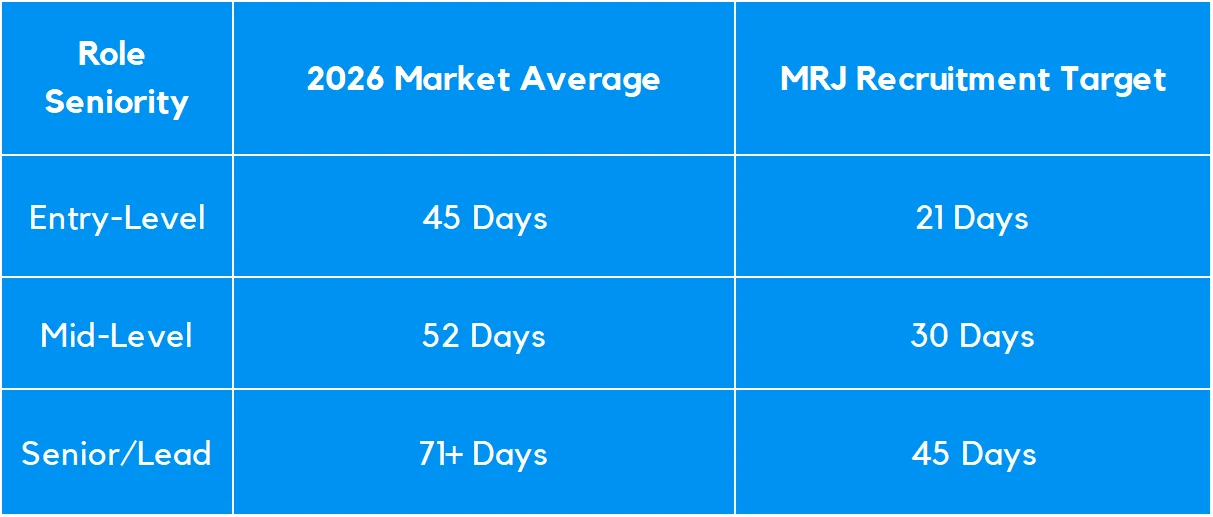
If your metrics are trending toward the market average, it’s time to strip back the bureaucracy. We recommend a "Three-Stage Max" rule: Initial Screen, Technical Assessment, and Final Culture/Stakeholder Fit.
2. Implement Engineering Hiring Trends 2026
The most significant shift this year is the move toward "Trustworthy Speed." This means moving fast but having the data to back up every decision. Modern engineering hiring trends 2026 emphasise skills-based hiring over traditional degrees.
- AI Governance: Ensure your ATS (Applicant Tracking System) complies with the latest regulations, such as the EU AI Act, to avoid legal bottlenecks in your US or UK operations.
- Pay Transparency: Including salary ranges in the initial outreach is no longer optional; it’s a prerequisite for engagement.
- The Blended Workforce: Streamline by considering "Fractional" or "Contract-to-Hire" models for urgent projects while building your permanent headcount.
3. Technical Assessment Best Practices: Signal vs. Noise
The technical test is where most companies lose their best candidates. To streamline your IT & engineering recruitment process, you must replace generic algorithm tests with job-relevant evaluations.
The New Rules of Vetting:
- Real-World Context: Instead of "Invert a binary tree," ask candidates to debug a piece of code similar to your current codebase.
- Paid Trials: For senior roles, consider a 4-hour paid consultancy session. This provides a higher signal than any 10-hour take-home assignment.
- Standardised Rubrics: Use platforms like HackerEarth or Juicebox to ensure every candidate is graded on the same objective criteria, reducing "gut feel" bias.
By applying these technical assessment best practices, you ensure that your engineering team only spends time interviewing candidates who have already proven they can do the work.
4. Building a Proactive Tech Talent Pipeline
Reactive hiring is the enemy of speed. To truly streamline your IT & engineering recruitment process, you must be "always on." This doesn't mean always interviewing, but always engaging.
We’ve found that maintaining a curated list of "Silver Medallists", candidates who were excellent but didn't quite fit a previous role, can reduce time-to-hire by 40% for future vacancies. Referencing our latest
Understanding the nuances of the 2026 tech market requires more than just a faster ATS; it requires a partner who understands the data behind the talent. We have helped dozens of scale-ups in the UK and USA reduce their time-to-hire by 50% through our stats-based recruitment methodology.
5. Candidate Experience and Developer Retention Strategies
Streamlining isn't just about getting people through the door; it’s about making sure they stay. High turnover forces you to repeat the recruitment cycle every six months.
Effective developer retention strategies start during the interview. Candidates in 2026 value:
- Impact over Tools: Explain what they will achieve in their first 6 months.
- Flexibility: Whether hybrid or remote, autonomy is the #1 retention lever.
- Clear Progression: Show them the path from Senior Engineer to Principal or Engineering Manager.
6. Navigating the USA and UK Markets
As MRJ Recruitment expands further into the USA, we’ve noted that while the cost of hiring software engineers UK is often lower, the pace of the US market is significantly more aggressive. If you are a UK company hiring in the States, or vice versa, your process must be adapted for timezone-agnostic interviews and localised compliance.
When looking for the best tech recruitment agency UK, ensure they have the infrastructure to support international growth. This is particularly vital for companies seeking
FAQ
How can I reduce my time-to-hire without sacrificing quality?
Focus on "Parallel Pipelines." Instead of interviewing one candidate at a time, run 3-4 through the final stages simultaneously. Use technical assessment best practices to filter out low-signal candidates before they reach your hiring managers.
What is the average cost of hiring software engineers in the UK?
In 2026, the total cost (including agency fees, job boards, and internal man-hours) typically ranges from 20% to 30% of the candidate's first-year salary. Using IT recruitment services for scale-ups can often reduce this by leveraging existing talent pools and pre-vetted networks.
Which tools are best for streamlining tech recruitment?
Top-tier tools for 2026 include:
- ATS: Greenhouse or Ashby (for data-driven insights).
- Sourcing: Juicebox (AI-native sourcing).
- Vetting: TestGorilla or MokaHR.
How do I attract senior talent when I can't match Big Tech salaries?
Focus on your EVP (Employer Value Proposition). High-growth engineers often choose "impact" and "modern tech stacks" over purely monetary gains. Highlight your developer retention strategies and your commitment to work-life balance.
Your Next Step: Mastering the Streamlined Recruitment Process in 2026
Recruitment is no longer a game of volume; it is a game of precision and speed. To ensure your engineering team is staffed with the best talent the 2026 market has to offer, follow this 3-step checklist:
- Conduct a Funnel Audit: Identify exactly where candidates are dropping out of your current process.
- Benchmark Your Salaries: Ensure you are competitive in the current UK and USA markets to avoid offer rejections.
- Schedule a Strategy Call:
Contact MRJ Recruitment today
About the Author: Rekiel
Rekiel is a Senior Multi-disciplinary Content Specialist at MRJ Recruitment with over a decade of experience in the tech talent space. Having navigated the recruitment shifts from the "great resignation" to the AI-integration era of 2026, Rekiel specialises in helping tech-for-good companies and high-growth scale-ups build sustainable, high-performing engineering teams. Rekiel's work focuses on bridging the gap between technical requirements and human-centric hiring.